

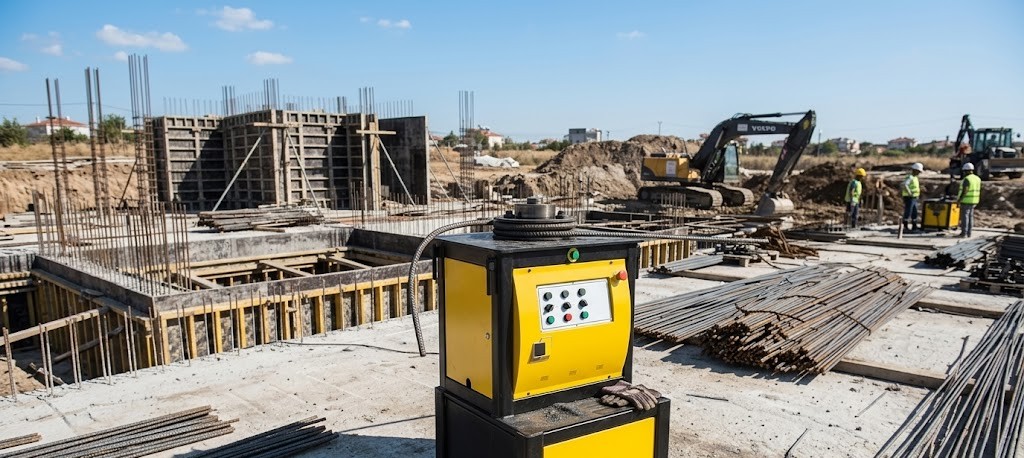
Rebar bending machines should be selected by evaluating bar diameter, production capacity, bending type, workload and technical service support together. Models developed for standard construction site applications and programmable machines designed for serial production do not meet the same needs.
Choosing the right product reduces labor time, maintains dimensional consistency and helps the production schedule run more smoothly. Göçmenler Group offers machine options for different project scales and rebar processing needs, providing solutions for construction, infrastructure and precast production.
When selecting a rebar bending machine, focusing only on maximum bending capacity is not enough. The machine should suit the business's daily production volume and the types of reinforcement used.
The following criteria should be taken into account during selection:
The highest-capacity machine is not the right choice for every business; the right machine is the model that meets production needs without creating unnecessary capacity.
In facilities with continuous, high-volume production, programmable models can deliver efficiency. At construction sites with more varied work, durable standard models that are easy to adjust and practical to use stand out.
Rebar bending machines are divided into different product groups depending on the nature of the operation. When choosing a model, it should be clearly defined which reinforcement elements the machine will prepare.
| Machine type | Main application | Suitable business profile |
| Standard bar bending machine | General reinforcement bending | Construction sites and rebar processing workshops |
| Programmable bending machine | Serial production at repeated angles | Facilities with high production volumes |
| Stirrup bending machine | Column, beam and foundation stirrups | Businesses producing stirrups in series |
| Starter bar bending machine | On-site straightening and bending of starter bars | Retrofitting and renovation projects |
| Spiral bending machine | Circular and spiral reinforcement production | Infrastructure and special engineering projects |
Standard bending machines offer versatile use under different construction site conditions. Programmable models, on the other hand, support angle and dimensional consistency in repetitive production.
The key distinction here is frequency of use. Quickly adjustable models are preferred for low-volume, varied jobs, while the level of automation becomes more decisive in high-volume production.
A machine selected with the right capacity allows rebar preparation to be carried out in a more controlled way. Compared to manual methods, it helps achieve standard bending angles and reduces the operator's physical workload.
The main factors affecting production efficiency are:
Machine efficiency depends not only on bending speed but on the total of setup, maintenance and downtime.
In field applications, a significant share of unplanned downtime results from improper use, delayed maintenance and incorrect capacity selection. For this reason, actual working conditions should be evaluated before purchase, not just the technical catalog.
On rebar bending machines, moving parts, the rotating table and bending pins are areas that must be managed carefully. Operators should use gloves, safety shoes and appropriate personal protective equipment during operation.
Sufficient working space should be left around the machine, electrical connections should be checked by authorized personnel, and protective systems should never be disabled. An accessible emergency stop system is also important for safe use.
Safe operation depends on the machine's protection systems working together with trained operator practices.
In addition, the bending pins used must be suitable for the bar diameter. Using the wrong attachment can cause both dimensional errors and premature wear of machine components.
Rebar bending machines are long-term investment products. For this reason, technical service, spare parts and maintenance support should be an integral part of the purchasing decision.
The following points should be examined when evaluating a supplier:
In addition to rebar cutting and bending machines, Göçmenler Group offers product solutions for various rebar processing operations. The product range allows businesses to evaluate needs ranging from standard bending to stirrups and special reinforcement production through a single supplier.
Sharing the bar diameters to be used, the daily production target and the electrical infrastructure with the technical team before purchase makes it easier to determine the right model.
The business's production data should be prepared before requesting a quote. This approach reduces the risk of choosing a machine with too little or too much capacity.
Information to check:
During the technical evaluation, the machine's continuous operating conditions should be considered, not just its catalog capacity. For high-volume businesses, motor design, body strength and cooling conditions are more important.
When selected according to how a construction site or production facility operates, rebar bending machines support workforce planning and production standards. The choice between standard, programmable, stirrup, starter bar or spiral bending options should be based on capacity, production volume and type of application.
When evaluating Göçmenler Group product options, project details, the bar sizes used and daily production targets can be shared with the technical team. This way, a machine solution suited to the business's current needs and future production plans can be determined.