

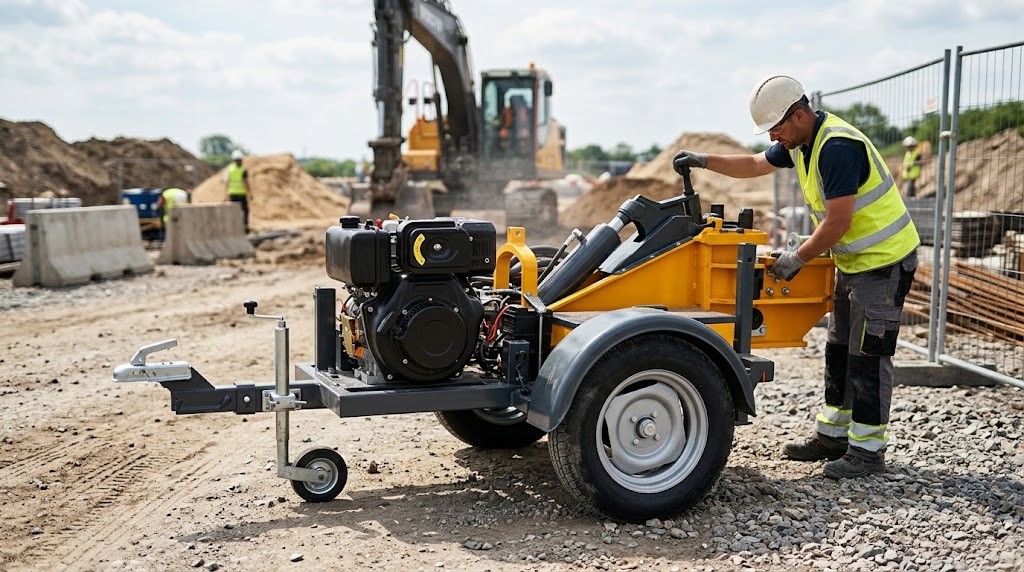
Diesel combined machine purchasing advantages should be evaluated in terms of combining rebar cutting and bending on a single piece of equipment, organizing the on-site layout and meeting project needs with a diesel-driven operating option. The right choice requires examining the area where the machine will be used and the daily production schedule along with its capacity.
The following criteria stand out in the purchasing decision:
Diameters and strength properties of the rebar to be cut and bent.
Distribution of cutting and bending within the daily workload.
The site's energy infrastructure and refueling routine.
Machine installation, transport and material feeding conditions.
Maintenance, spare parts and technical support requirements.
When evaluating diesel combined machine options with Göçmenler Group, you can share the work you carry out regularly as well as your current project. This way, you can shape your purchasing decision not only according to the needs of a single job but according to your business's overall usage pattern. Specifying cutting and bending expectations separately makes it easier to evaluate the right model.
A diesel combined cutting and bending machine can be considered by businesses that want to combine two basic reinforcement preparation operations on the same equipment. Instead of arranging the installation, transport and work areas of separate machines, a workflow can be built around a single piece of equipment.
Meeting cutting and bending needs at the same work point can simplify equipment layout and help plan the material preparation process more efficiently. The value of this advantage depends on the production intensity on site and the sequence of operations.
A combined design does not mean that both operations can be performed simultaneously on every model. In jobs where cutting and bending will be carried out intensively at the same time, the work routine should be evaluated separately. Explaining the order in which daily tasks are carried out before purchase clarifies how well the machine matches usage expectations.
Diesel-powered options can be considered for work areas where electrical connection is limited or the energy infrastructure has not yet been completed. However, the requirements and conditions of use of the machine's auxiliary systems, as well as its engine type, should be verified for each model.
Fuel supply, engine maintenance and a suitable working environment are part of the purchasing plan. Ventilation at the location where the machine will be used and safe removal of exhaust gases should be taken into account in the installation evaluation.
The suitability of a diesel-driven machine for the business should be determined by refueling, maintenance routine and work area conditions as well as energy access. Therefore, the decision should not be based solely on the expectation of operating independently of an electrical connection; the project's daily usage pattern should also be examined.
Collecting technical specifications in a common evaluation table during the purchasing process allows options to be compared more clearly. Cutting and bending capacities should be examined separately, and it should be checked for which steel properties the capacity values are given.
| Evaluation topic | Information to check | Contribution to the purchasing decision |
| Cutting capacity | Rebar diameter and steel strength | Shows suitability for cutting needs |
| Bending capacity | Diameter, material property and bending requirement | Allows comparison of shaping work in the project |
| Engine and operating system | Diesel engine specifications and conditions of use | Clarifies compatibility with site infrastructure |
| Installation and transport | Dimensions, weight and transport method | Helps prepare the installation plan |
| Scope of delivery | Attachments, documents and support provided | Reduces uncertainties in the order scope |
Since the capacity values specified for cutting and bending on the same machine may differ, the two operations should not be evaluated based on a single diameter limit. When sending your request to Göçmenler Group, it is useful to specify the largest diameter to be cut and the largest diameter to be bent separately.
Reducing the number of machines when choosing a combined machine can provide a layout advantage. However, when calculating usable space, the machine's footprint alone should not be the basis. The clearances needed for feeding and moving bars and for removing finished parts should also be determined.
The routes along which long materials will be carried and the operator's working position should be planned together. Positioning the material to be cut, the parts to be bent and the finished reinforcement without mixing them supports the workflow.
Determining the feeding and stacking areas around the machine in advance makes it easier for the expected layout advantage of combined equipment to be reflected in daily work. If the machine is planned to be moved to different sites, loading, unloading and securing requirements should also be discussed before purchase. Portability expectations should be verified against the model's transport features.
When evaluating an investment in a diesel combined machine, access to maintenance points, consumable parts and the technical support process should also be examined. Requirements for cutting blades, bending components and engine maintenance should be clarified through the operating instructions.
Preparing the following information before ordering makes the process easier:
With Göçmenler Group, you can evaluate the advantage of buying a diesel combined machine based on your project's actual needs. By sharing your technical requirements, you can request information on options suited to capacity, scope of delivery and conditions of use.